Saturday, March 17, 2012

The SMART Board (Pros)

The SMART board has begun to find its way into classrooms across the country, especially as the growth of technology heightens. The SMART board is essentially a modern day projector that connects itself with a computer inside of the classroom. Whatever is projected on the computer’s screen is also projected on to the SMART board; however, with this board, the teacher is able to do much more. This board is touch screen and can be operated by one’s finger or the pen provided with the board. Therefore, a teacher can open a presentation created on the computer, make notes on top, record the presentation, and then email the notes to the class. This could potentially allow students to focus more on class involvement than writing the notes down since the teacher can send them out to the class. The SMART board provides amazing opportunities educationally. First, the board provides interactive learning. Children in the classroom are able to work on this board while the rest of the class is engaged. Essentially, the board is the modern dry-erase or chalkboard. Secondly, this board uses multimedia to adapt to all learning styles. Sound bytes, pictures, videos, lectures, and text are all available for use on this board. Third, this board only requires one computer that operates with Windows software, so educators do not have to spend too much money on computers for the entire class. All that is needed is a simple PC. In order to be adaptable in our education, schools will begin to implement technology into the classrooms in big or small ways, and this board is a great way to do so.

In The Proust and the Squid, Wolf expresses her concerns about the implications associated with the rapid growth technology. She questions that the rapidity associated with technological growth may cause humans to find less satisfaction in reading long text and may have attention issues. Oppositely, she proposes the ideas that because of technology’s fast-paced style, humans may be able to complete tasks more quickly and, in turn, spend more time on in-depth thought. Secondly, people may become better at multi-tasking (Wolf 214). The educational opportunities provided by the SMART board both appease Wolf’s worries as well as support her positive implications. Because the SMART board is used for educational purposes, it’s a great way to bridge the gap between a non-technological world and an entirely technological one. As we move forward, classrooms will have to adapt to at least some form of technology, as it is relevant to today’s real world. However, this board still allows children to learn proper reading skills as well as learn to use technology to complement their learning styles. If used properly, this device can only support children’s learning needs.

Thursday, March 15, 2012

Cell Phones

As time has moved on, and technology has progressed, our ability to communicate across the world has opened new doors, and removed long-existing land barriers. Ecomonmies changed forever, and loved ones could live further away without losing contact with one another. No invention has better served this purpose than the telephone.
The telephone has it's issues, but many of which were later solved with the introduction of the cell phone. It was suddenly possible to live at all times without ever being unreachable. You could be anywhere in the world and connect with anyone else, at any given time.
Today, in the U.S alone, 278.9 million people subscribe to a cell phone service. By comparison, there are 309 million people alive in the U.S according the 2000 census data.
Now that cell phone have become so unanimous, their implications have become more and more wide-spread. Check out our Prezi for the details:


Monday, March 12, 2012

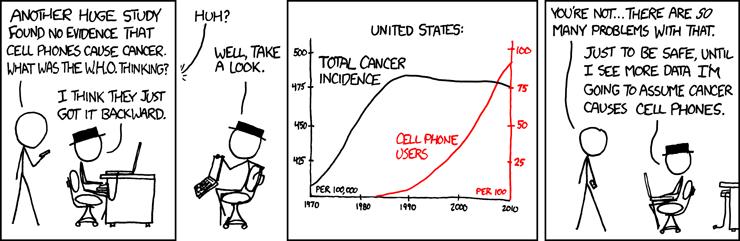
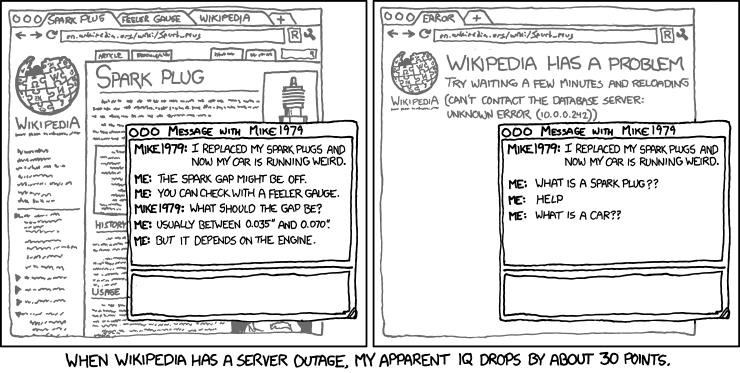
What the Internet has done to our brains. A comic.


Just something I thought you guys might enjoy! Seemed at least a little relevant to the class.

Wednesday, March 7, 2012

Rock Prodigy (Not cool)


The "not cool" aspect of the product itself includes syncing, recording, and clustering. In order for the iOS device to recognize the notes and chords being played, it must record through either its built-in mic or an external mic attached to it. This can lead to delay and lag between the audio input of the guitar and the video output from the iOS device. The faster the song, the more difficult it will be to account for the faults in the syncing as the user's timing will not be perfectly in-time with the notes on the screen. This may be further amplified by the fact that it can be difficult for the built-in mic to pick up all the sounds coming from the guitar, thus needing the guitar to be played relatively close to the iOS device at all times. Any sound that is not recorded will be considered a missed note and an error.
User reviews have claimed that the notes on the screen as seem clustered at times. This is a combination of being limited to a small screen as well as having a continuous stream of multiple notes flying across the screen that are challenging to individually distinguish.

There are limitations on Rock Prodigy's functionality, one of which being only being compatible with iOS devices. That means that a large number of people will be unable to use the application simply due to lack of access to an iOS device, or people will have to spend more money to purchase a compatible device, which seems unlikely that they would do so in order to just be able to use Rock Prodigy. More costs are added to the use of this application as users have to buy songs that they want to play. Each song costs a minimum of $0.99 and there is a limited number and variety of songs that are available for users to purchase and learn. In other words, users cannot use Rock Prodigy to learn any song that they would like to learn as they can only buy and download songs that have been programmed and listed on the list available for purchase. This problem is not aided by the fact that users cannot program their own songs into the format that is used in Rock Prodigy, thus further limiting the number of songs users can learn.

The implications of Rock Prodigy and its technology may be harmful additions to the accelerating transition to a technological and digital-dependent society. Learning how to play the guitar from Rock Prodigy is significantly different from the traditional way of learning how to play an instrument, using sheet music. As a result, new learners will be unable to understand the theory behind music and never gain the ability to sight-read, transcribe music, or teach themselves another instrument, all of which are possible with a true understanding of how sheet music works. The learner will become too overdependent on the application and on the iOS device that they cannot play the guitar without them, making it inconvenient and inflexible.

Nicholar Carr in The Shallows discusses this idea that we are becoming overdependent on technology and further distancing ourselves from the traditional methods. He says that technology and the internet is changing the way our minds function and that he is unable to focus when reading long-passages or articles, and instead finds himself skimming and skipping from places via hyperlinks. It is sad that we are unable to grasp a full and rich understanding of things the more we rely on technology and in terms of music, we are losing the appreciation of its beauty as an expression of art.

Sunday, March 4, 2012

Proton Ion Sequencer: What's (very) cool


Thursday, March 1, 2012

SmartCap

Description:

What's Cool (Anna)

The most important use of the SmartCap is to promote safety.  The creator of the SmartCap was involved in the mining industry, where employees use heavy machinery and work long hours.  These two conditions could result in an accident, but with the SmartCap, the accident could be averted.  The SmartCap screen device located inside the machine's cab will beep if it is determined that the cap's wearer is too fatigued.  Not only does the information go to the in-cab device, but it can also be monitored by employers.  Employers can review this information to decide who should and who should not be operating heavy machinery.  It can also be used to determine work schedules.  Employers can look over results from the SmartCap to see who is able to work long hours, and who tires too easily to handle heavy machinery for long periods of time.

The SmartCap is practical.  While it will not function properly of thoroughly soaked, it can withstand sweat.  It can also be washed.  The producers of the SmartCap recommend that users hand wash the cap for best results.  Along with the baseball cap design, this technology is available in headbands and visors.  The technology's producers are working on implementing it in hard hats as well.

On page 73 of Alone Together, Sherry Turkle discusses how new technologies are being invented to do jobs that humans once held.  If enough accidents occurred in a certain field of work, it could be decided that it would be safer to invent some sort of technology to work in that field.  The SmartCap is a technology that can be used with people to help complete a job, instead of replacing people.

Monday, February 27, 2012

Lynda.com

What's Cool
- Nikki

What's Not Cool
Lynda.com's interface limits its adaptability to new learning opportunities that may have otherwise been seized in a classroom. Rosen writes, "Technology cannot and never should replace curriculum or content. The curriculum should drive the technology use, rather than allowing the technology to dictate the curriculum" (Rosen 214). Lynda.com's technology definitely limits it's effectiveness to learn material quickly and completely. The training videos are numbered into consecutive chapters. Also, videos by nature are linear forms of communication. This linear sequence of administering information can put a hold on spontaneous questions that will arrise about other facets of the particular software one was learning. (For instance, you may not know why you are unable to select something by simply clicking on it.) When questions do arrise, finding the solution soon is key to connecting the material for memory. I suppose someone could search for their answers by simply glancing the various chapter titles, but in many events, the user will not know what what the particular keywords are for their specific troubleshoot. Rosen continues to write that, "Learning environments should allow for teachers to interrupt students, for students to interrupt other students, even for students to interrups teachers when appropriate."

You cannot merely watch the videos to learn the material. Nicholas Carr draws on Eric Kandel, a Nobel Prize winning neuropsychiatrist, for insight into the process of memory. "For memory to persist, ... the incoming information must be thouroughly and deeply processed. This is accomplished by attending to the information and associating its meaning fully and systematically with knowledge already in well established memory." (Carr 193) Therefore, you cannot expect to retain the software tools learned from Lynda.com in your memory, unless you are able to connect it with previous experience and are able to understand its applications.

The videos are very long, and many users do feel very bored while watching multiple videos that each could be as lengthy as ten minutes. Rosen writes "[Online courses] are too static of an environment for an entire course" because of the lack of socialization and the lack of multiple learning modalities (Rosen 220). Being trapped in headphones and listening to a monotonous voice speak for extended periods of time can be very uninteresting. Distractions (especially social ones that this technology isolates us from) will creep in and cause for interrupted learning. Perhaps Lynda could use more immediate positive reinforcement and interaction, like that of playing a video game. In the books, Rewired and Rethinking Education, both agree that online courses could have a lot to learn from video games (Rosen 49) (Collins & Halverson 84) . While Lynda.com does allow you to download exercise files to work along the training video, this service comes at an additional cost. Even if you use the exercise files, being forced to stop what you are thinking to repause and replay the videos over and over again is not the ideal way operate a web browser which will inhibit the seamless learning workflow that educational environments strive for.

- Steven